
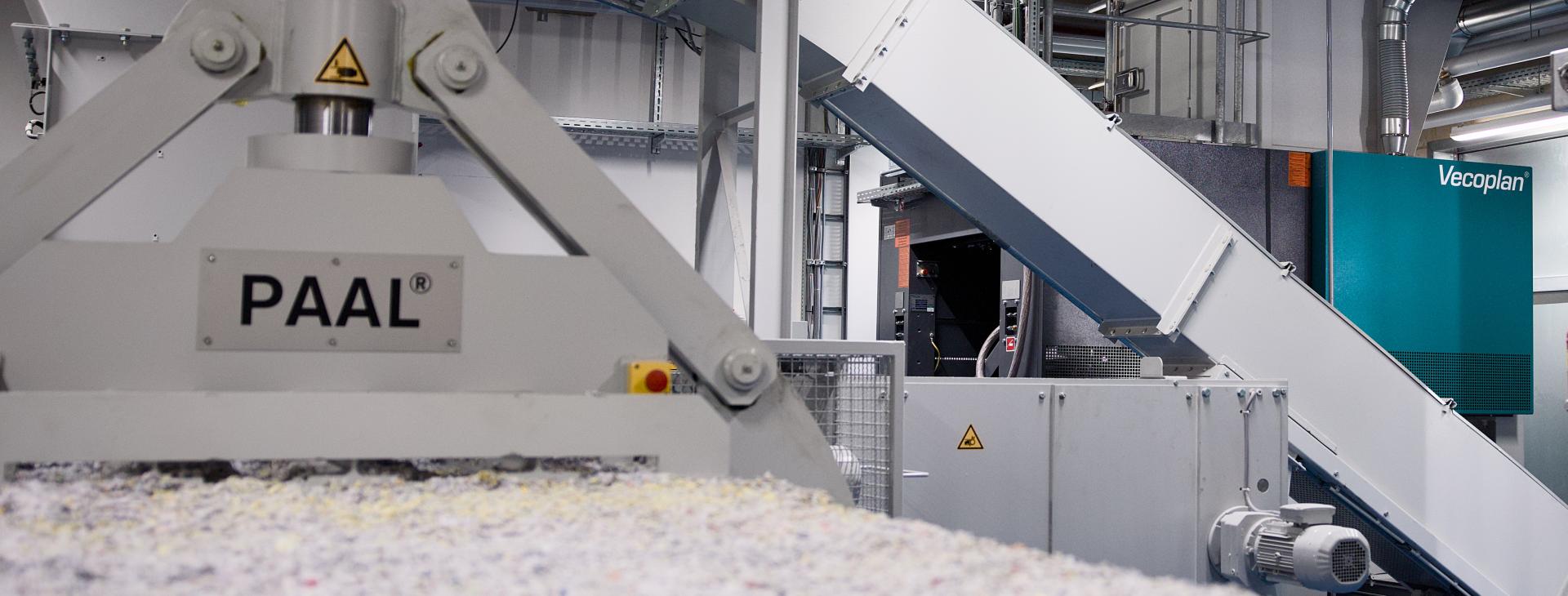
Caritas Wendelstein Werkstätten are part of Caritas of the Archdiocese of Munich and Freising, one of Germany’s largest social welfare organisations. At their “Am Oberfeld” site in Raubling, they provide 120 jobs for people with disabilities, as well as a support centre with 24 places for people with profound and multiple disabilities. The Wendelstein Werkstätten offer meaningful work and, with it, opportunities for social participation. One of their key revenue-generating activities is certified document destruction. With more than 4,000 customers across the Upper Bavaria region, the organisation has established itself as a professional provider of data-protection-compliant destruction of documents and data media.
One system, three floors, one special mission
When Caritas Wendelstein Werkstätten began planning their new “Am Oberfeld” building, one thing was clear: document destruction needed to be included from the outset. The requirements, however, went far beyond a standard shredding set-up. The operation had to be integrated into a demanding building layout and work reliably across three floors. Manual workstations for workshop employees are located on the upper floor, the ground floor houses the reception area with an HGV drop-off point, and the basement contains the shredding technology and baler press.
In a workshop where people with intellectual and physical disabilities work, safety and ease of operation are held to particularly high standards. Fire protection and dust extraction systems had to be designed to ensure maximum safety even in the event of a fault, while still allowing for straightforward operation by employees without technical training. “People work here who rely on additional support. That gives this project a different dimension from a purely industrial installation,” says Bastian Wienen, Area Sales Manager at Vecoplan. “Making sure the system runs reliably and safely matters here in a way that goes beyond the technical requirements.”
There was also a clear need to increase capacity. The previous system, a twin-shaft shredder, with a rated throughput of approximately 800 kilograms per hour, would not be enough to keep pace with the growing volume from over 4,000 customers in the long-term. Caritas therefore looked for a partner able to deliver the entire system from a single source, from early-stage planning with the architects through engineering, installation, electrical work, and commissioning.
VIZ 1300: Particularly robust against contaminants
initial contact with Vecoplan came through training events run by the Interessengemeinschaft Datenschutzgeräte (IGD), a trade association focused on document and data carrier destruction, where the advantages of single-shaft shredding technology came up time and again. "We met Vecoplan in person at IFAT in Munich," recalls Jürgen Baumert, Head of Technical Operations at Wendelstein Werkstätten. "After that, it was clear to us that this was the right solution for our needs." Vecoplan delivered a complete, turnkey system from a single source.
At the heart of the installation is the VIZ 1300 single-shaft shredder. The decision to go with single-shaft technology had a clear rationale: with rotary shears, such as those previously used at Wendelstein Werkstätten, a single solid foreign object can destroy the entire cutting assembly. Repair costs in such cases can easily run to between 15,000 and 20,000 euros. With the VIZ 1300, neither wear nor contact with a foreign object requires the replacement of the entire cutting assembly. Instead, individual cutting crowns can be rotated or replaced as needed, enabling the machine to return to operation quickly and remain available over the long term. A hydraulic floor plate also provides access to the cutting chamber, enabling foreign objects to be removed within minutes even when the machine is loaded.
The system is designed as a vertical material flow across three levels: from the sorting and feed area, via chutes and conveying equipment, down to the shredder and baler. Documents sorted by the workshop employees drop through the floor into the basement, where they are shredded, then conveyed via a screw conveyor and scraper chain conveyor to the baler, where they are compressed into bales ready for transport. The baler itself was also supplied as part of Vecoplan’s complete system package.
Installation amid an active building site
Installing the system presented both parties with unusual challenges, not least because the individual components had to be integrated across three floors of a building still under construction. Structural work and system installation ran in parallel, and staircases and lifts were out of service for months. Heavy components had to be brought in via external scaffolding on the outside of the building. "We were dealing with a project none of us had tackled before," says Jürgen Baumert. "Throughout, Vecoplan kept their eye on the end goal and always found pragmatic ways forward."
Fire protection and dust extraction were incorporated into the plans from the very beginning, not added as an afterthought. If smoke is detected, fully automatic fire dampers close instantly, preventing it from being drawn upwards through the building by the chimney effect. A spark detection system identifies potential ignition sources and smouldering residues before a fire can develop. The dust extraction system removes airborne particles at every material transfer point, including the baler, the shredder and the transfer hood on the ground floor. This protects employees from dust exposure and prevents the build-up of potentially explosive atmospheres.
Reliable in operation, stronger in impact
"Since commissioning, the system has performed exactly as we had hoped," says Jürgen Baumert. "The installation as a whole runs reliably, operations are stable, and so far there has been no significant wear to speak of." The investment has also paid off in terms of throughput: the new system processes up to 2.4 tonnes of material per hour, compared with 800 kilograms with previous installation. But the increase in capacity delivers more than operational efficiency. It allows Wendelstein Werkstätten to better fulfil their core mission: providing people with disabilities with meaningful, protected employment.
Vecoplan remains present throughout day-to-day operations. Via the Vecoplan Smart Centre (VSC), the system is monitored remotely. Faults can be diagnosed remotely and, in many cases, resolved without the need for an on-site visit. "Shortly after commissioning, there was a fault with the conveyor belt feeding material into the shredder," recalls Jürgen Baumert. "Even though the cause had nothing to do with the Vecoplan system itself, the service team was on hand straight away and helped us get the problem sorted."
What began as a technical project has since become an integral part of daily operations at one of Bavaria's most modern workshop facilities, and a demonstration that industrial process technology and a social mission are by no means mutually exclusive. The document destruction operation not only generates revenue for the Werkstätten, but provides the people who work there with meaningful and reliable employment.
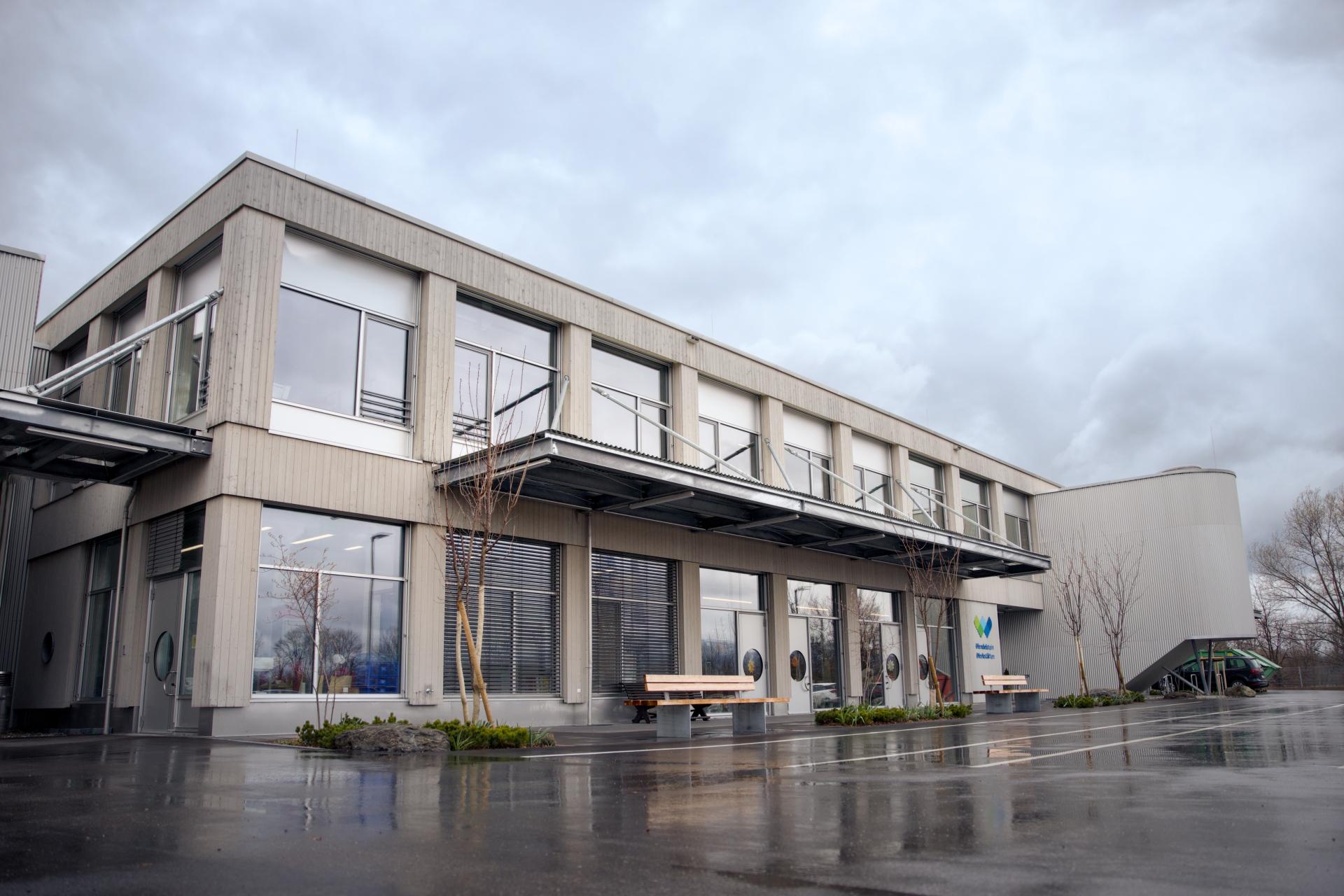
At their “Am Oberfeld” site in Raubling, the Wendelstein Werkstätten provide 120 jobs for people with disabilities, as well as a support centre with 24 places for people with profound and multiple disabilities.
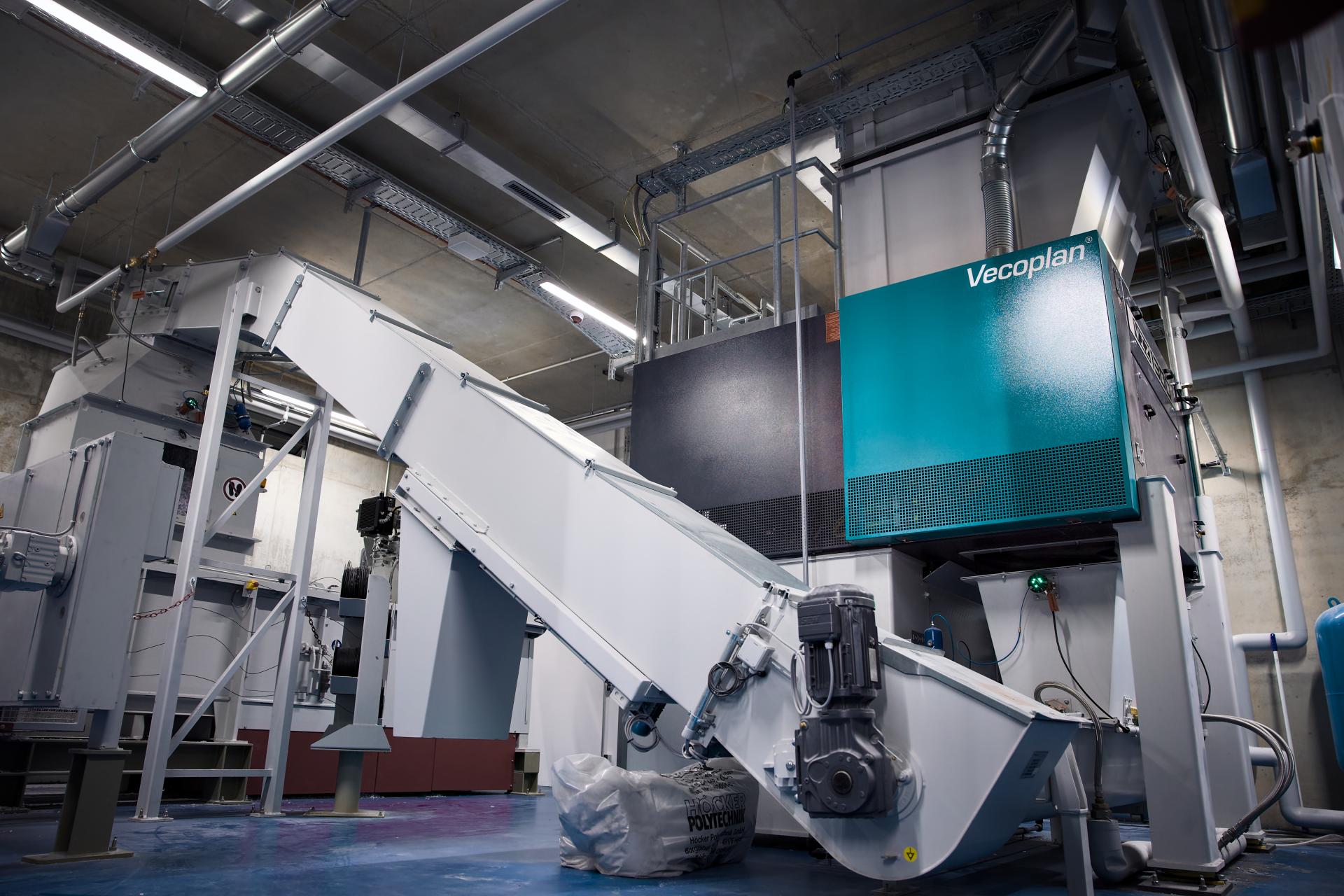
At the heart of the installation is the VIZ 1300 single-shaft shredder. The new system processes up to 2.4 tonnes of material per hour, compared with 800 kilograms under the previous installation.
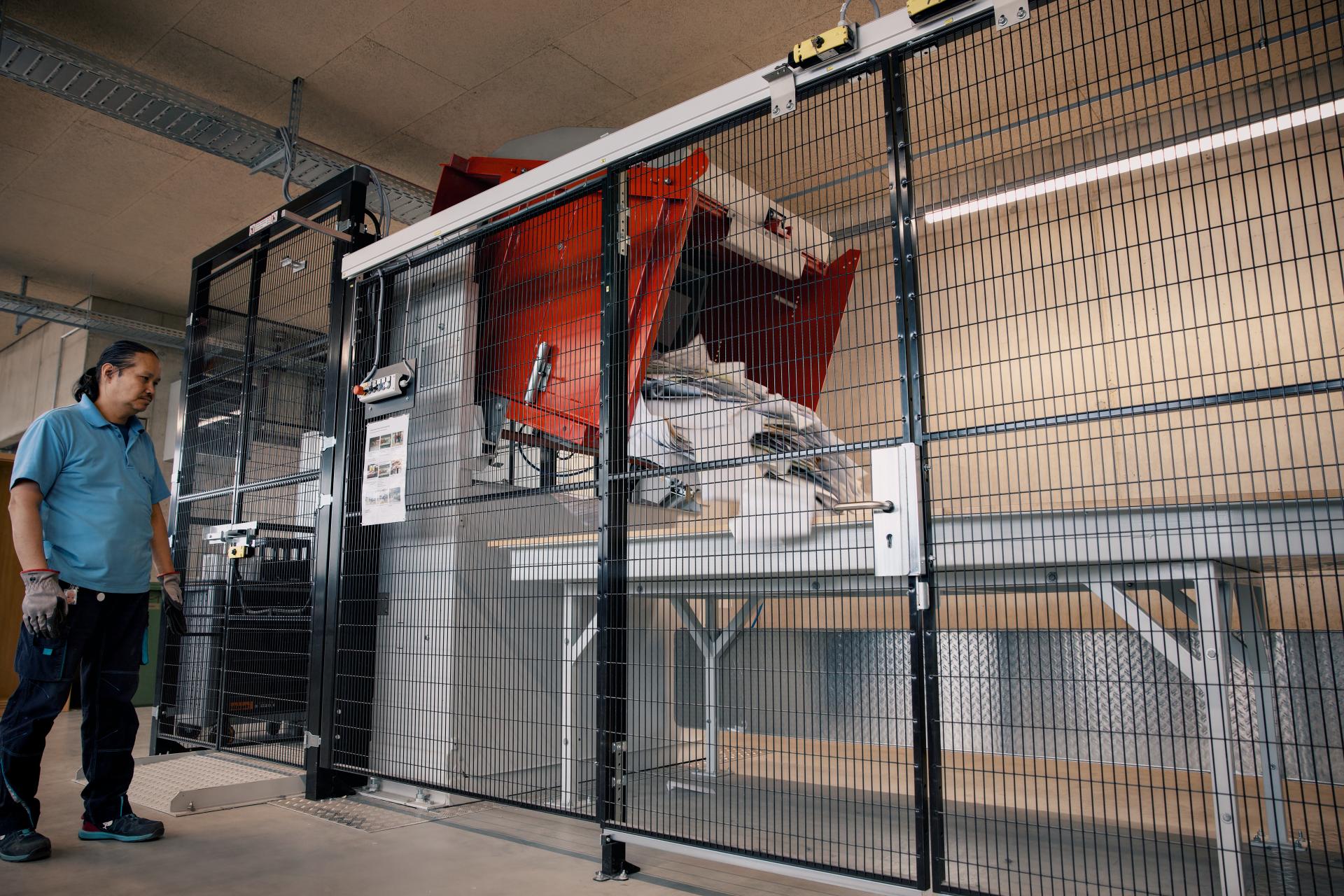
In a workshop where people with intellectual and physical disabilities work, safety and ease of operation are held to particularly high standards. The system needed to be simple enough to operate safely, even for staff without technical training.
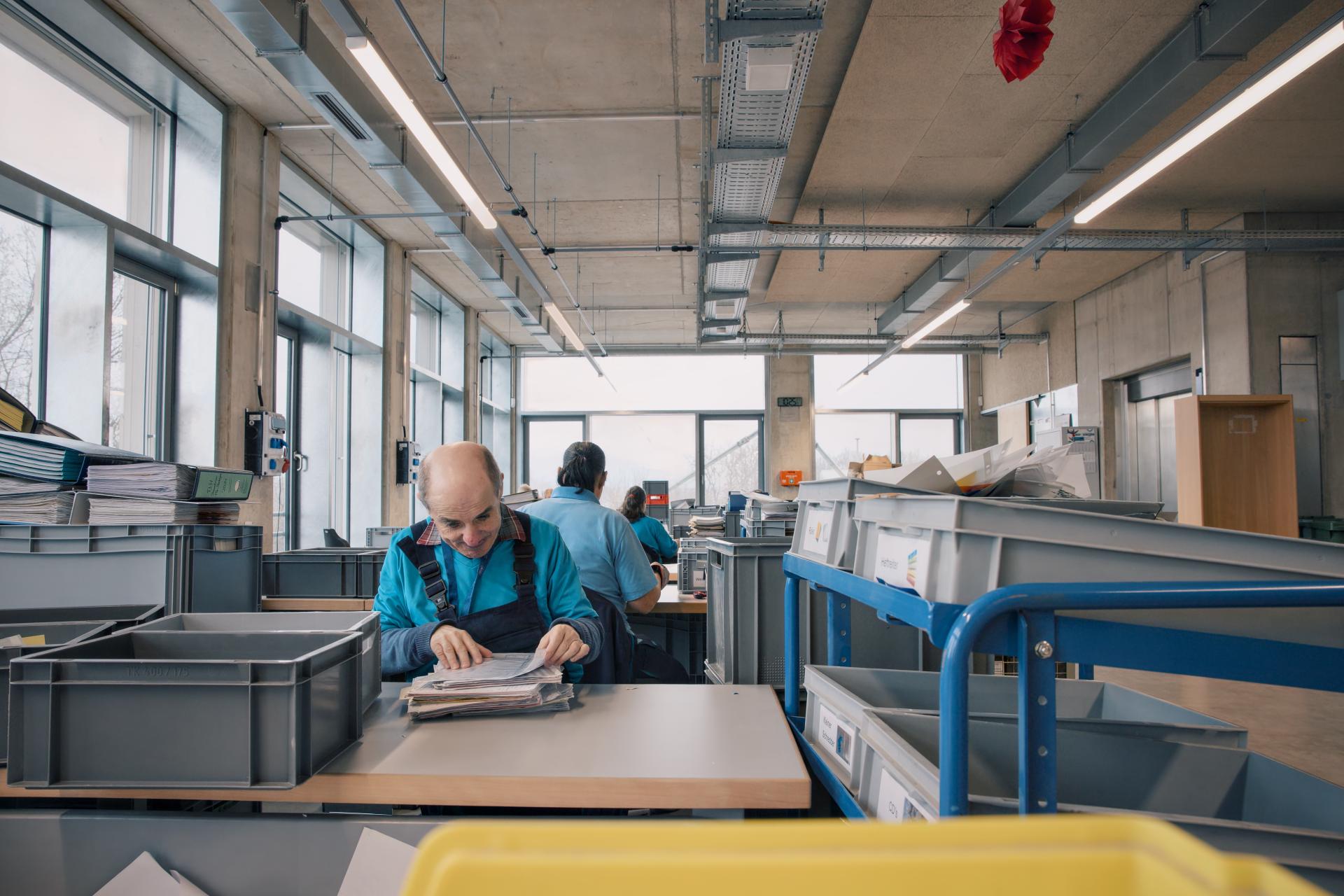
Manual workstations for workshop employees are located on the upper floor, the ground floor houses the reception area with an HGV drop-off point, and the basement contains the shredding technology and baler press.
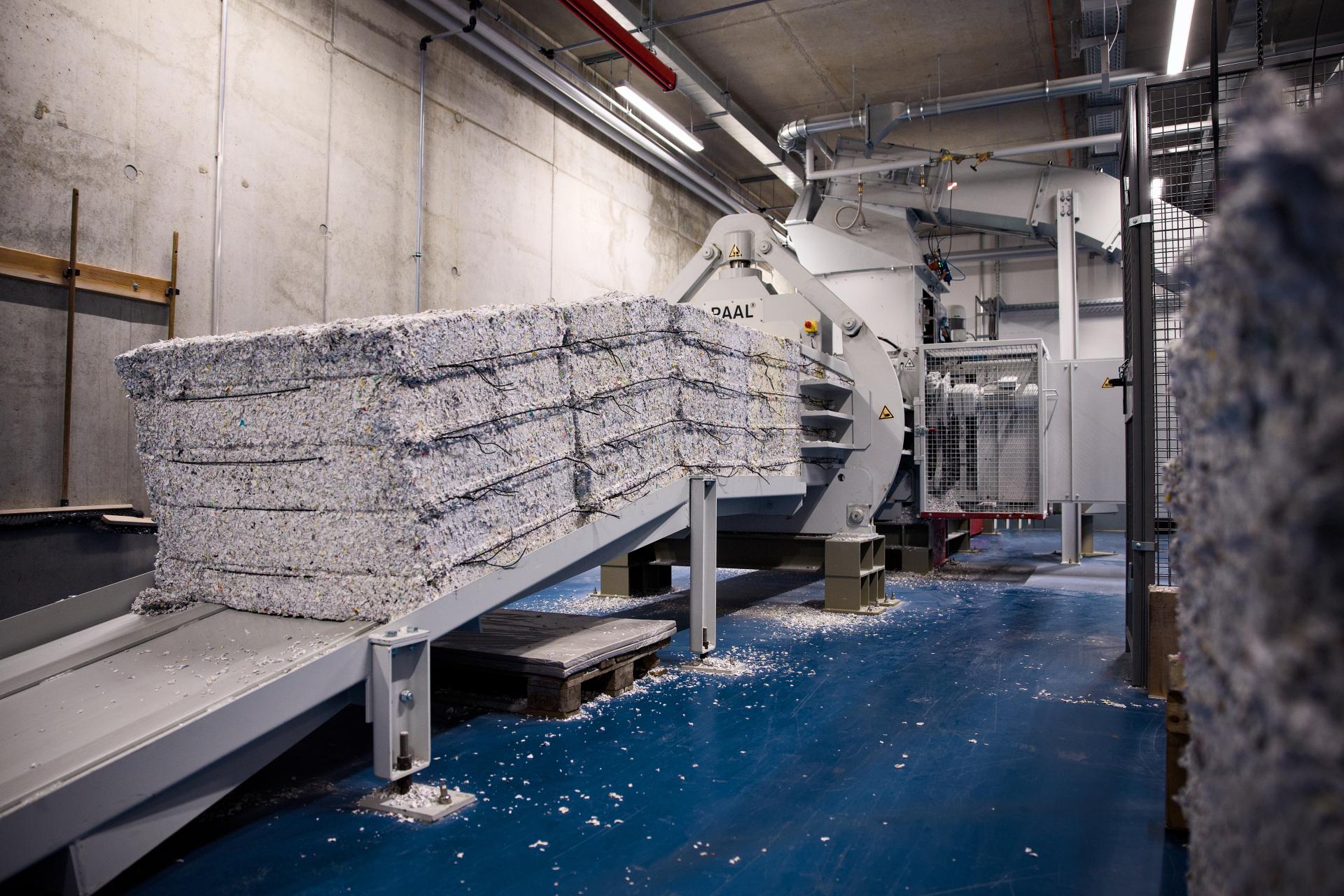
The baler itself was also supplied as part of Vecoplan’s complete system package.
