
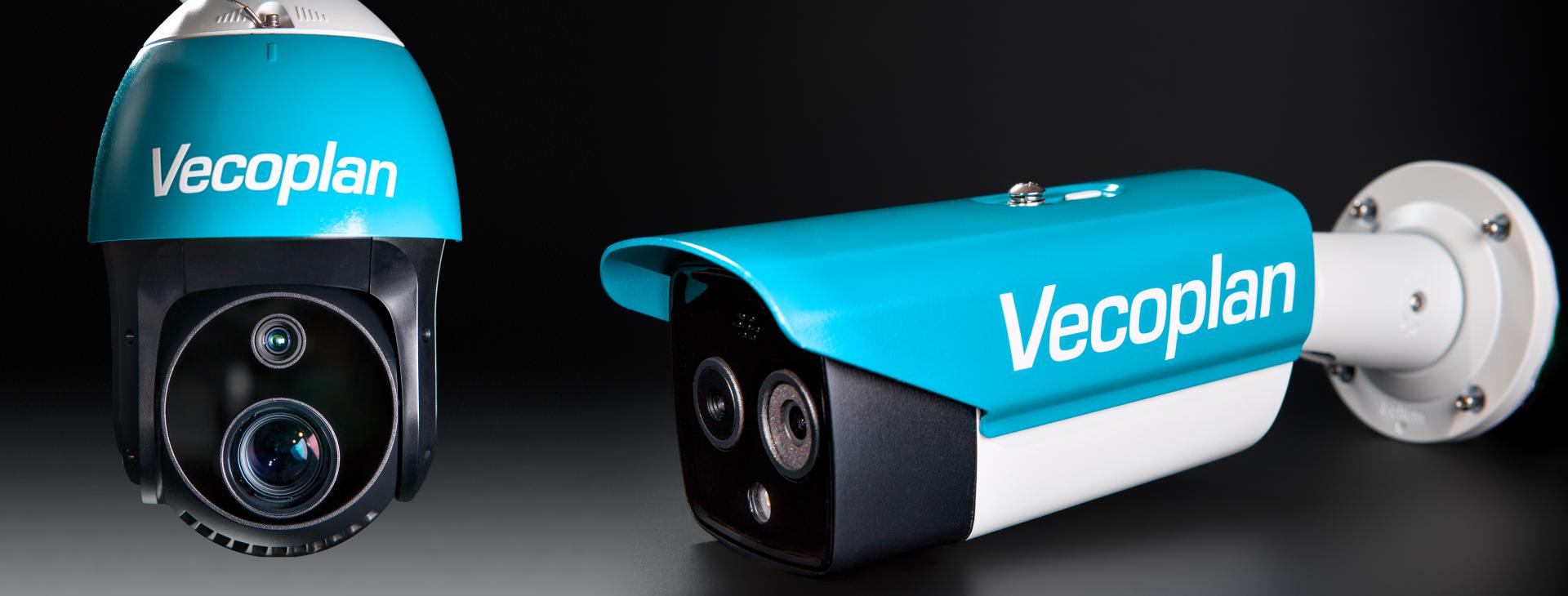
Reliable early detection is a key component of plant safety for operators of recycling plants. This is because dangerous temperature rises are not always immediately visible:
materials can heat up gradually and pose a risk long before flames or smoke appear. The intelligent Vecoplan thermal imaging camera continuously monitors defined areas, combining thermal and visual image data.
Why is the fire risk increasing in recycling plants?
The risk of fire is increasing, primarily because an increasing number of battery-powered products are ending up in recycling facilities via household and general waste. If the lithium-ion batteries inside them are damaged during processing, this can lead to short circuits and excessive heat build-up. This increases the risk of a fire breaking out in a recycling facility. The particular challenge is that an increase in temperature may not be immediately apparent in the form of smoke or flames. Consequently, a hotspot can develop before the problem is detected. Early thermal monitoring helps identify and assess unusual temperature trends in good time.
What is the Vecoplan Hotspot Monitoring?
Vecoplan Hotspot Monitoring is a camera-based solution for detecting critical temperature trends in recycling facilities.
A thermal imaging camera continuously monitors defined areas, individual measurement points, and entire monitoring zones for unusual temperature changes. If a customised temperature threshold is exceeded, the system triggers an alarm. This allows plant operators to respond to critical incidents before a hotspot develops into a fire.
An overview of the key features:
- Extensive temperature monitoring of defined areas of the plant
- Individually configurable temperature thresholds
- AI-supported assessment of unusual temperature events
- Thermal image and visual image in a single system
- Continuous monitoring of relevant areas
- Integration into the Vecoplan Smart Center (VSC)
- Operational even in the event of an internet outage
How AI supports early fire detection


An elevated temperature does not necessarily indicate a fire risk. In recycling plants, for instance, vehicles, exhaust fumes and certain machine components can also cause thermal anomalies. This is why the AI-supported image recognition system evaluates the measured values in the context of the specific plant. If the system detects an increase in temperature in the material feed area, for example, it can consider whether a forklift or wheel loader is operating there at that time. Combining temperature measurement, thermal imaging, visual camera footage and AI-supported analysis helps distinguish relevant events from expected temperature rises. This reduces unnecessary alarms and enables the plant operator to assess the situation more quickly.
Where can a thermal imaging camera be used?
Thermal imaging cameras for recycling plants can be used in various areas, not just on individual conveyor belts.
One advantage of this system is that the thermal imaging camera is located outside the material flow, unlike sensors installed directly within it. This means that it is not subject to direct mechanical wear caused by the material. It also reduces the risk of contamination from the material.
The specific areas monitored depend on the configuration of the plant and individual requirements.
These include, for example:
- Conveyor belts and material flows
- Material bunkers
- Stockpiles
- Material deliveries
- Certain machine parts
- Other individually defined monitoring zones
Thermal image plus camera image: assessing alarms more effectively

In addition to the thermal image, the bi-spectral camera provides a visual image of the monitored area. In the event of an alarm, this means that the plant operator receives information about an unusual temperature and gains a direct visual impression of the situation on site. They can connect to the plant and view the incident immediately via the Vecoplan Smart Centre. This makes it easier to assess thermal anomalies and distinguish between relevant and potentially non-critical events.
Hotspot Monitoring in the Vecoplan Smart Center

Vecoplan integrates Hotspot Monitoring into the Vecoplan Smart Centre (VSC), [KK1.1] the plant’s digital control centre. Temperature data and alarms are processed centrally in the VSC. The camera system remains operational even in the event of an internet outage; a permanent internet connection is not required for monitoring. A programmable logic controller (PLC) and the VSC.router, which ensures a secure IT connection, are among the components used to process the measurement and video data. This digital infrastructure also enables specialists to support plant operators in assessing incidents via remote service.
Early fire detection in recycling plants as part of the overall strategy
As a turnkey plant supplier, Vecoplan offers solutions for various stages of the process, including shredding, conveying, screening and cleaning. Hotspot Monitoring complements this portfolio by providing continuous thermal and visual monitoring of specific areas of the plant.
Integrating this into an overall system provides plant operators with the following benefits:
- fewer interfaces between different systems
- interoperable components
- centralised processing of information
- options for retrofitting existing plants
- continuous monitoring of defined plant areas
The growing use of battery-powered devices will continue to present challenges for recycling plants in the future. It is therefore all the more important to identify critical temperature trends at an early stage, and to assess them in the context of the specific plant. Intelligent thermal imaging technology combines temperature measurement, visual information, and AI-supported analysis to enable context-based, early fire detection.
FAQ: Frequently asked questions about early fire detection in recycling plants
A lithium-ion battery fire can occur if a battery is mechanically damaged during processing. This can lead to short circuits and excessive heating. If the damaged battery enters the subsequent recycling process, it may cause a fire. Lithium-ion batteries therefore pose a particular fire risk to recycling facilities.
A thermal imaging camera continuously monitors specific areas of a recycling plant for unusual temperature changes. If the temperature in a monitored zone exceeds a customisable threshold, the system will trigger an alarm. Additionally, Vecoplan Hotspot Monitoring combines the thermal image with a visual camera image and AI-supported analysis. This allows plant operators to better understand thermal anomalies in the context of the specific plant environment and identify potential hotspots early on.
A hotspot is an area with a noticeably elevated temperature. The rise in temperature may indicate a critical situation, but does not necessarily mean there is a fire. It is therefore important to assess the thermal event within the context of the specific plant.
Yes. The camera system is connected to the Vecoplan Smart Centre, but does not rely on a permanent internet connection. The system therefore continues to function even in the event of an internet outage.
Yes, in principle, the camera solution can be integrated into various systems and used to retrofit existing recycling plants. The most suitable configuration depends on the areas of the plant to be monitored and the specific monitoring requirements.


